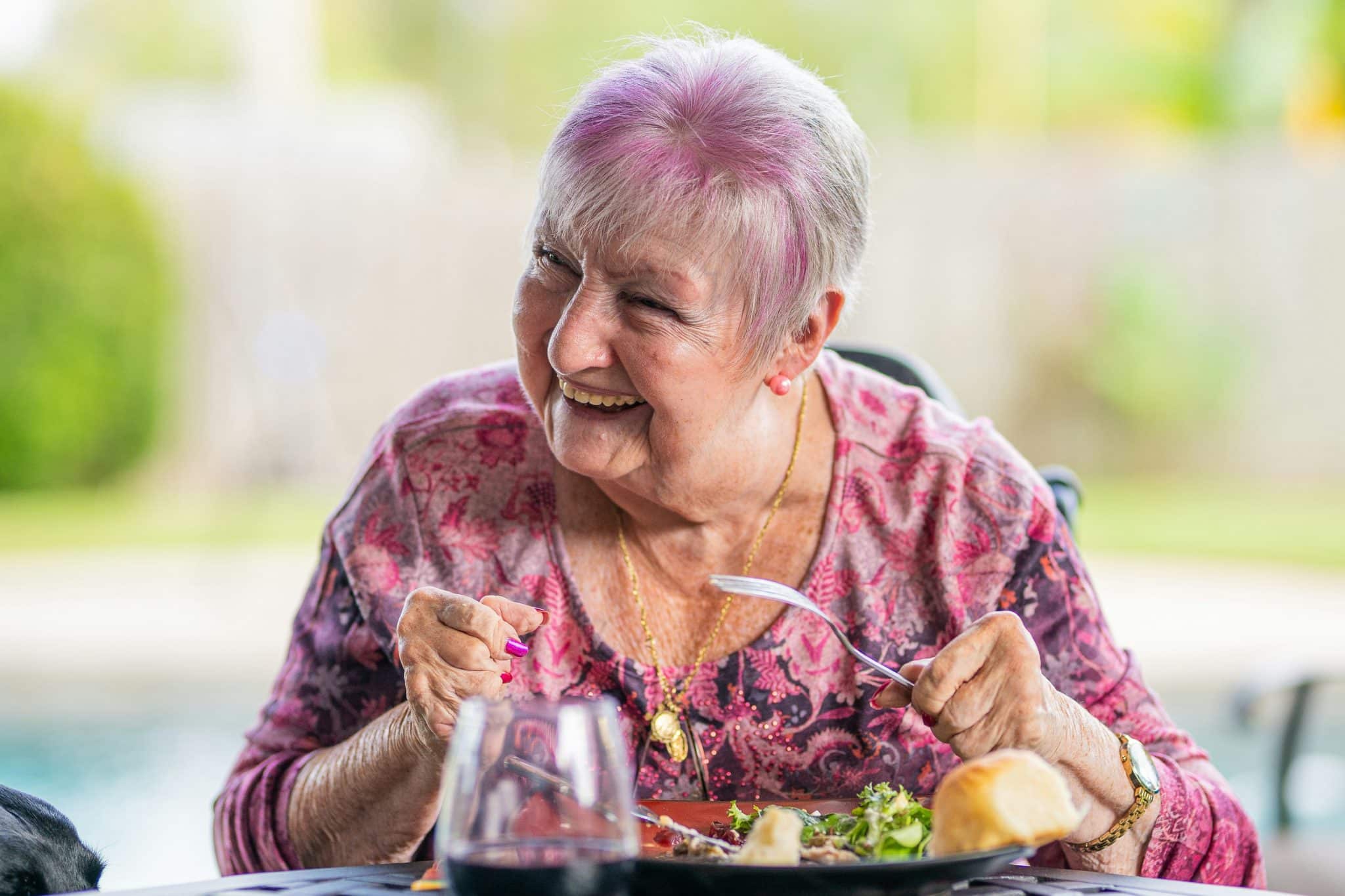
Providing good care for an elderly person at home inevitably involves paying attention to what’s on their plate: small daily choices that have a huge impact on their health, energy levels, and quality of life.
However, it is also an area that is often overlooked. Many families only realize that something is wrong when more obvious signs appear, such as weight loss, excessive fatigue, frequent falls, or mood swings. And often, the root cause is poor nutrition.
At Hands Care, home care always includes attention to this fundamental pillar.
Why do nutritional needs change as we get older?
Aging brings with it a series of physiological changes that directly affect the way the body processes food, making it essential to adapt one’s diet as one enters old age.
The metabolic rate gradually slows down and caloric needs tend to decrease, but the solution is not to simply eat less overall. Quality becomes more important than quantity, especially since the need for certain micronutrients—such as essential vitamins and minerals—may actually increase.
Starting at age 70, additional challenges arise that make diet even more crucial:
- The gradual loss of muscle mass, known as sarcopenia, increases the need for protein;
- A decrease in bone density increases the risk of osteoporosis and fractures;
- Changes in taste and smell reduce appetite and the enjoyment of eating;
- Difficulties with chewing and swallowing can limit the types of food a person eats;
- Polypharmacy, which is very common at this stage, can interfere with the absorption of various nutrients.
Added to all this is an often-overlooked factor: malnutrition can be mistaken for the normal signs of aging. Careful observation and timely intervention are essential, especially in cases of polypharmacy, which directly interferes with nutrient absorption and requires careful medication management.
Essential Nutrients for Seniors Over 70
When thinking about what to eat in old age, the most important criterion is nutritional density: the more nutrients per calorie, the better. Here are the foods that deserve special attention:
- Protein: It is essential for preserving muscle mass and slowing sarcopenia. International recommendations call for a minimum intake of 1 g of protein per kg of body weight per day, which is higher than the amount recommended for young adults. The best sources include fish, eggs, legumes such as chickpeas, beans, and lentils, lean meats, and dairy products; carefully selecting these foods is one of the most important steps in helping older adults regain muscle mass;
- Calcium and vitamin D: These are essential for bone and muscle health. Calcium is found in plain yogurt, low-fat milk, and dark green leafy vegetables. Vitamin D is synthesized through sun exposure and is found in fatty fish such as sardines and salmon, a staple of the Portuguese diet with far more nutritional value than many realize;
- Vitamin B12: Its absorption decreases with age, which may affect cognitive function and the nervous system. It is found in lean meats, fish, eggs, and dairy products;
- Iron: important for preventing anemia and maintaining energy and immunity. The main sources are lean red meats, legumes, and dark green leafy vegetables;
- Fiber: whole grains, oats, vegetables, fruit, and legumes are essential for regulating bowel movements, a very common concern in this age group;
- Omega-3: found in fatty fish, nuts, and flaxseeds, it contributes to cardiovascular health and brain function.
When there are difficulties with chewing or swallowing, the solution is to adjust the texture of the food (opting for softer preparations, such as purees or soups), without, however, compromising its nutritional value.
Spreading your food intake over five to six smaller meals throughout the day, rather than concentrating it into two or three, aids digestion and ensures a more consistent intake.
Foods to Avoid in Old Age
Just as there are foods to prioritize, there are others that should be consumed in moderation or even eliminated from your daily routine. Knowing these restrictions is just as important as knowing what to put on your plate.
- Excess salt: increases the risk of high blood pressure and fluid retention, two problems that are particularly common among the elderly. The solution isn’t to make food bland: on the contrary, aromatic herbs such as parsley, cilantro, oregano, or thyme are perfect for adding flavor without any risks;
- Simple sugars and ultra-processed foods— such as filled cookies, soft drinks, processed snacks, and ready-to-eat meals—are low in nutrients and put a strain on the body. Older adults with diabetes or prediabetes should be especially careful, limiting foods with a high glycemic index and choosing fresh fruit as a natural alternative to sugar;
- Excessive saturated fats: sausages, processed meats, and fried foods should be consumed in moderation, as they contribute to cardiovascular diseases, which are, in fact, the most prevalent in this age group;
- Alcoholic beverages: Alcohol interferes with the absorption of essential vitamins, increases the risk of falls, and can cause dangerous reactions when taken with medications; therefore, it should be avoided or reduced as much as possible;
- Foods with an inappropriate texture: For older adults with dental problems or swallowing difficulties, certain raw or overly fibrous foods can pose a real choking hazard. Adjusting the texture is not a matter of preference, but rather a safety measure that caregivers should always keep in mind.
How to Ensure Proper Hydration in Older Adults
Hydration in older adults is perhaps the most neglected aspect of nutrition as a whole and one that can have the most negative consequences. As people age, their thirst mechanism becomes less sensitive: an older adult may be dehydrated without feeling it, without realizing it, and often without mentioning it.
The international guidelines of the European Society for Clinical Nutrition and Metabolism (ESPEN) recommend that older men consume at least 2 liters of fluids per day and older women at least 1.6 liters, unless otherwise directed by a doctor.
Your fluid intake doesn’t have to be limited to water: soups, herbal teas, milk, fresh juices with no added sugar, and fruits with high water content—such as watermelon, cantaloupe, oranges, and strawberries—all count toward your daily total and make staying hydrated more varied and appealing.
At home, a few simple strategies can make a huge difference, such as:
- Set regular times to drink throughout the day, regardless of whether you feel thirsty;
- Keep a glass of water in plain sight and within easy reach;
- Make it a firm daily habit to include soup with lunch and dinner;
- Flavor the water with slices of lemon, orange, or mint leaves to make it more appealing.
It is also important to keep in mind that certain medications, such as diuretics and laxatives, increase fluid loss and make rehydration even more urgent. An attentive caregiver knows when to take action and when to notify the family.
The Role of Home Care Providers in Feeding the Elderly
A home caregiver is much more than just someone who cooks: when it comes to nutrition for older adults, their role extends to observation, adaptation, and daily monitoring.
A good caregiver monitors daily appetite, identifies weight fluctuations, adjusts food textures and consistencies as needed, ensures adequate fluid intake, and, last but not least, creates a calm, pleasant, and stimulating mealtime environment.
At Hands Care, support with nutrition and hydration is an integral part of our in-home services, which include planning and preparing meals tailored to each person’s individual needs.
All of this care—which is compassionate and personalized, and integrated into a home care plan developed in close collaboration with the family—is what allows us to make a real difference in the quality of life of those we care for and in the peace of mind of their loved ones.
To finish
Taking care of an elderly person’s diet at home is, above all, an act of love and care. Some small daily choices have a profound impact on the physical and emotional health of those who have reached old age.
If you’d like to learn how Hands Care ’s in-home care services can help your family member maintain a safer and more nutritious eating routine, schedule a free, no-obligation consultation today. Our team is ready to listen to your situation and find the best solution for your family.