The role of physiotherapy in healthy ageing
The field of geriatric rehabilitation aims precisely to promote, maintain and restore the functionality of the elderly person.
With advancing age, musculoskeletal, neurological and balance changes occur which can jeopardize autonomy and increase the risk of injury.
Physiotherapy for the elderly therefore works on several fronts:
- Maintaining muscle strength and joint range;
- Balance and coordination training;
- Mobility, i.e. the ability to move around and carry out daily activities more safely.
Within the framework of Hands Care, which provides care at home, the integration of physiotherapy services makes it possible to accompany the elderly person in a safe and close environment, in the comfort of their own home.
Thus, the focus is not just on healing or recovery, but above all on preventing loss of functionality from an early stage, promoting healthy and happy ageing.
When to start physiotherapy
There is no exact age to start physiotherapy, but the earlier it is integrated into the care plan, the better the results will be.
For example, when signs appear such as difficulty getting up from a chair, slow walking, falls or fear of falling, intervention becomes urgent.
In addition, if there is already a medical condition, such as arthrosis, osteoporosis, heart or neurological problems, physiotherapy for the elderly should be considered quickly as an integral part of the approach.
In the Hands Care practice, the support service includes specialized assessment and intervention at home, facilitating the senior’s access to technical support.
So, if you start to notice any functional limitations, less mobility or simply want to stay active more safely, physiotherapy can be the right step.
Types of physiotherapy suitable for the elderly
Within the sphere of geriatric physiotherapy, there are various modalities and approaches:
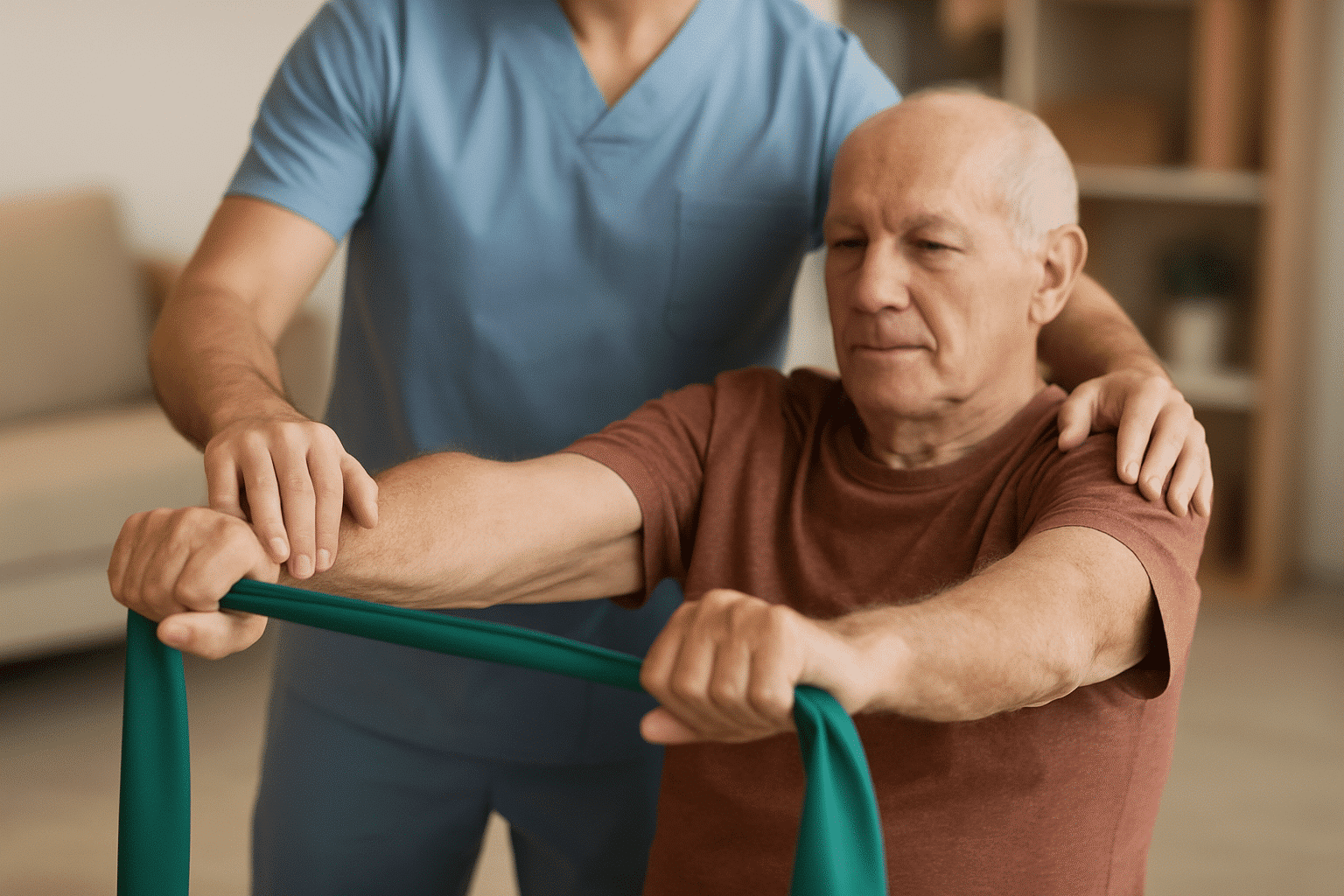
- Therapeutic exercises: controlled movements to strengthen muscles, improve balance and maintain flexibility;
- Geriatric rehabilitation: ideal for those who have been hospitalized, undergone surgery or face significant limitations;
- Functional physiotherapy: geared towards mobility in the elderly, focusing on everyday tasks such as walking, getting up or sitting down;
- Home physiotherapy: recommended for those who find it difficult to leave the house or prefer to be accompanied in their own environment.
In the case of Hands Care, this last option is integrated into our home care services, guaranteeing close, continuous care adapted to each situation.
Physical and mental benefits of regular physiotherapy
The regular practice of physiotherapy brings benefits that go far beyond the physical aspect. Here are some of the most notable:
- Greater strength and balance, helping to prevent falls;
- Greater mobility, allowing the elderly person to continue performing their tasks independently;
- Less pain and tension, especially in the joints and back;
- Better quality of sleep, with less discomfort and more relaxation;
- Greater self-esteem and emotional well-being by feeling that you are still able to do things at your own pace.
In addition, physiotherapy creates a healthy routine, promotes social interaction, stimulates the mind and helps prevent isolation, which is common in older age.
Home physiotherapy: comfort and safety in treatment
One of the great advantages of intervention in the senior sphere is the possibility of opting for home physiotherapy.
Here, in the context of Hands Care, the home support model allows treatment to take place at home, where the person feels safer and surrounded by those they love the most.
The advantages are manifold:
- It eliminates the need to travel, which can be painful or risky for those who already have reduced mobility;
- It allows the exercises to be adapted to the environment in which the person lives, i.e. the physiotherapist observes and adjusts the treatment in a real context, where routines take place;
- It enhances continuity and adherence to the treatment plan: being at home, with specialized support, allows the therapeutic exercises and the associated routine to be followed;
- Facilitates family integration: caregivers or family members can participate in the process, learn support techniques or orient themselves based on the defined plan.
Choosing Hands Care for this type of intervention means opting for an organization that values dignity, proximity and quality in caring for the elderly.
Tips for integrating physiotherapy into your daily routine
For physiotherapy to work, it’s important to create habits and maintain regularity. Here are some suggestions:
- Establish a fixed routine: just like a routine appointment, schedule weekly or fortnightly sessions and stick to the timetable;
- Home exercises: between face-to-face sessions, set aside 10 to 15 minutes a day to do the prescribed therapeutic exercises (e.g. balance, stretching or walking);
- Safe environment: make sure the exercise space is free of obstacles, well-lit and has nearby support (chair or bar if necessary) to reduce the risk of falls;
- Involve your family or carers in the process: the encouragement of those around you makes all the difference on those days when you’re not in the mood;
- Record progress: small victories, such as getting up without support, walking further or feeling less pain, are important to encourage the senior and the caregiver;
- Communicate with the physiotherapist: sharing doubts, pains or changes is essential for adjusting the plan.
More than an obligation, physiotherapy should be seen as a moment of personal care.
Final word
Physiotherapy for the elderly is much more than a treatment. It’s a way of preserving freedom, autonomy and the joy of living.
At Hands Care, we believe that ageing can and should be active, dignified and lived with confidence.
Through our geriatric rehabilitation services, we help you to prevent risks such as falls and to value what really matters: living each day in comfort and safety.
If you feel that a family member is losing mobility, avoids activities for fear of falling or simply needs encouragement in everyday life, talk to us. We’re here to help transform routines and restore the security of living well every day.