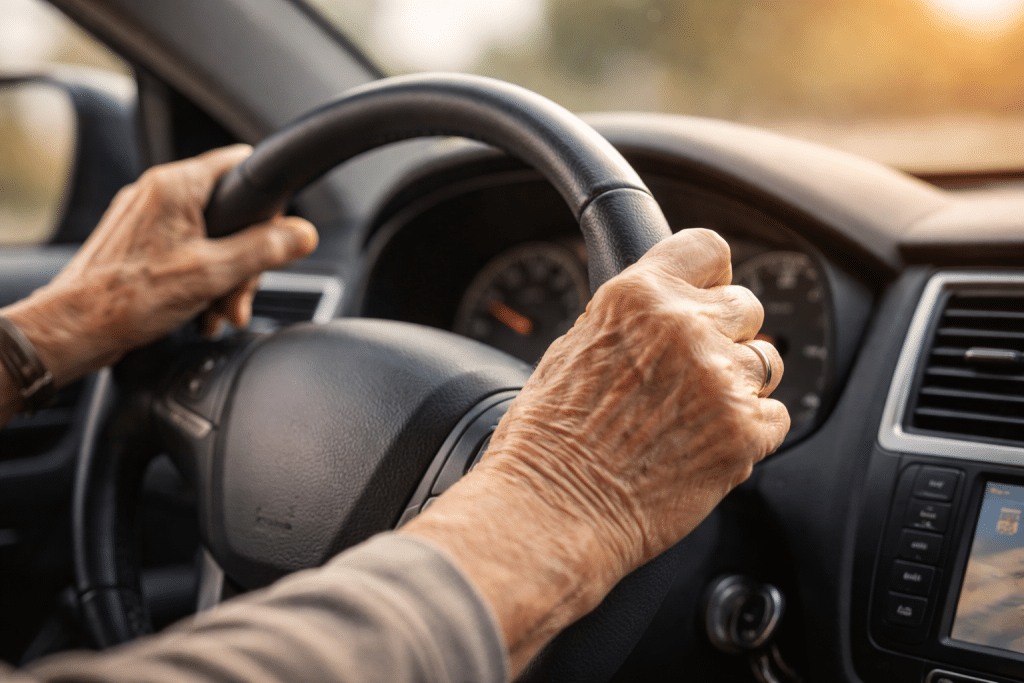
Driving is much more than controlling a car: it represents independence, autonomy and active participation in the social life of the elderly. However, with advancing age come physical, cognitive and sensory challenges that can compromise the ability to drive safely.
Understanding when an elderly person should stop driving is a delicate but essential consideration, not only for those who are getting older, but also for families, carers and home care professionals.
In this Hands Care article, we explore the main warning signs, how to assess fitness to drive, diseases that can interfere, safe mobility alternatives and the role of the doctor and family in this decision.
Warning signs that an elderly person may need to stop driving
Knowing how to identify the signs of risk when driving is extremely important for protecting the elderly and other road users. Some common warning signs include:
- Difficulty seeing other vehicles, pedestrians or traffic signs clearly;
- Slow reaction to unexpected situations or confusion about the route;
- Collisions or near misses are frequent, even on family journeys;
- Hearing problems that prevent the detection of horns or sirens;
- Difficulty parking or maintaining trajectory on the road.
These behaviors can be signs that the ability to drive is being affected by natural changes in the body and/or brain, reinforcing the need for honest reflection on when to stop driving.
How to assess driving ability objectively
An assessment of driving ability should be comprehensive and, wherever possible, professionally guided. There are several approaches that can be used:
- Regular medical examinations: especially for eyesight and hearing, which are essential for safe driving;
- Cognitive and psychomotor tests: to assess attention, memory and reaction time;
- Practical driving assessments: carried out by certified therapists or specialists.
In some European Union countries, driving license revalidation includes medical examinations at certain ages (for example, at 60, 65 and 70) to confirm that the driver is still fit to drive safely.
What diseases and limitations affect driving in old age?
Several health conditions are known to negatively influence driving ability. Here are some of them:
- Vision problems: such as cataracts or glaucoma;
- Hearing loss: compromises the perception of sound signals;
- Neurological diseases: such as Parkinson’s or dementia, which can affect coordination and judgment;
- Arthritis and physical limitations: they reduce the strength and flexibility needed to drive.
The combination of multiple conditions can make driving significantly more dangerous. It is therefore important to consider not only chronological age, but also general state of health ( biological age) when deciding whether or not to continue driving.
How to broach the subject with a family member without generating conflict
Suggesting to a relative that it might be time to stop driving can be difficult. To make this conversation more constructive, here are some suggestions:
- Choose a calm moment with no pressure;
- Express concern based on observable facts, not accusations;
- Focus on safety and well-being, not loss of independence;
- Involve professionals, such as doctors or therapists, to reinforce the technical perspective.
Remember that emotional support and boosting self-esteem are just as important as practical recommendations.
Safe alternatives for maintaining the elderly’s mobility
Stopping driving doesn’t mean isolating yourself. There are several alternatives to the car for maintaining mobility, such as:
- Adapted public transport: many cities offer accessible and comfortable services;
- Shared transport and cabs: can be used as needed;
- Network of friends and family: sharing travel can strengthen social ties;
- Home care servicessuch as those provided by Hands Care, which can also organize or accompany safe journeys.
These options help to preserve the elderly person’s autonomy, without compromising their safety on the road or their self-esteem.
The doctor’s role in the decision to stop driving
The family doctor or an internal medicine specialist plays a key role in assessing the elderly person’s ability to drive.
Through clinical examinations, vision and hearing tests and cognitive assessments, the doctor can:
- Identify conditions that affect driving, such as loss of muscle mass or neurological diseases;
- Recommend specific adaptations or restrictions (e.g. not driving at night);
- Advising on the need to stop driving and suggesting alternatives.
A doctor’s recommendation can have a significant influence on the decision, helping the elderly person and their family to deal with the situation in an informed and calm manner.
Legal issues and driving license renewal obligations
In Portugal, there is no fixed maximum age that legally prevents an elderly person from driving, as long as they maintain the necessary physical and mental capacities.
However, there are rules for the revalidation of driving licenses for the elderly which include:
- Mandatory revalidations at 60, 65 and 70 years of age, on presentation of a medical certificate;
- After the age of 70, the license must be revalidated every two years;
- For certain vehicles, such as heavy goods vehicles, additional tests are required (plus some restrictions for heavy passenger vehicles).
These rules aim to strengthen senior road safety without discriminating on the basis of age alone.
Final word
Deciding when an elderly person should stop driving is a personal and often emotional process. With information, open dialog and professional support, decisions can be made that protect both the elderly person and the community.
Home support services, such as Hands Care, can be part of this support network, promoting mobility, dignity and quality of life throughout old age.
If you need support, schedule a technical visit without obligation. We’re with you every step of the way.
Frequently Asked Questions (FAQs)
What are the main signs that an elderly person should stop driving?
Difficulty seeing or hearing, slower reaction times, confusion when driving or frequent minor accidents can all be important warning signs.
Is there an age limit for driving in Portugal?
No. In Portugal, there is no legal maximum age for driving. However, there are mandatory license revalidations from the age of 60 (depending on the date of issue), accompanied by regular medical examinations.
What diseases or conditions can affect your ability to drive?
Conditions such as cataracts, glaucoma, dementia, Parkinson’s, hearing loss and physical limitations can compromise driving safety.
How can I broach this subject with a family member without provoking conflict?
Speak at a calm moment, with empathy and based on facts. Involving a doctor can help make the conversation more constructive.
What alternatives are there for maintaining mobility after you stop driving?
From adapted public transport to home support, such as that provided by Hands Care, there are several safe ways to maintain autonomy and connect with the community.