Sight is one of the senses that most influence the independence and well-being of our loved ones.
As we get older, the body undergoes natural changes and, unfortunately, the eyes are no exception.
For those who receive home support, such as that provided by Hands Care, keeping a close eye on eye health is essential in order to anticipate warning signs, prevent complications and ensure a better quality of life and vision on a daily basis.
In this article, we explore the main vision problems in the elderly, prevention strategies and simple adaptations that make all the difference in everyday life.
The most common vision problems in old age
Old age is associated with various visual changes, ranging from natural physiological changes to common eye diseases that can compromise autonomy if left unattended.
Among the most common are the following:
- Presbyopia: reduced ability to focus on close objects, requiring more effort when reading or doing detailed work;
- Cataracts: opacification of the lens which results in blurred vision and sensitivity to light, and is one of the most frequent causes of vision loss in the elderly;
- Age-related macular degeneration (AMD): affects the macula (the part of the retina responsible for central vision), making it difficult to recognize faces or fine details;
- Glaucoma: a silent disease that damages the optic nerve and can cause loss of peripheral vision if not diagnosed early;
- Dry eyes and other discomforts: tear production decreases with age, causing irritation and blurred vision.
These vision problems in the elderly can develop gradually, so proper preventive care and regular monitoring are essential.
Hands Care, as a home care provider, ensures close and attentive monitoring, contributing to the early detection of signs and the promotion of eye health routines in the context of the home.
Factors that increase the risk of eye complications
There are several conditions that increase the likelihood of eye diseases in old age:
- Older age: the risk naturally increases with age;
- Systemic diseases: such as diabetes or hypertension, which influence ocular circulation and can lead to complications such as retinopathy;
- Family history: a genetic predisposition increases the likelihood of developing certain eye diseases;
- Sun exposure: UV radiation without adequate protection can contribute to the early formation of cataracts or accelerate retinal degeneration;
- Lifestyle habits: smoking or eating a diet low in antioxidants increases the wear and tear on eye tissues.
Understanding these factors makes it possible to implement an effective strategy for preventing eye complications.
Habits that help preserve eye health
Adopting a conscious eye care routine is one of the most effective ways of protecting the eyes and delaying the onset or progression of common eye diseases in older people:
- Healthy and balanced dietFoods rich in vitamins A, C and E, zinc and omega-3 fatty acids (found in fish, green vegetables and nuts) support retinal health;
- Sun protection: wearing sunglasses with UV protection reduces the impact of the sun’s rays, which are harmful to the eyes;
- Stop smoking: smoking is associated with an increased risk of cataracts and macular degeneration;
- Maintaining blood sugar control: in people with diabetes, strict blood sugar control reduces the risk of diabetic retinopathy;
- Regular physical exerciseHealthy habits and moderate physical activity improve general circulation, which also benefits the eyes.
Small changes like these can make a big difference in maintaining eye health over the years.
The importance of regular visits to the ophthalmologist
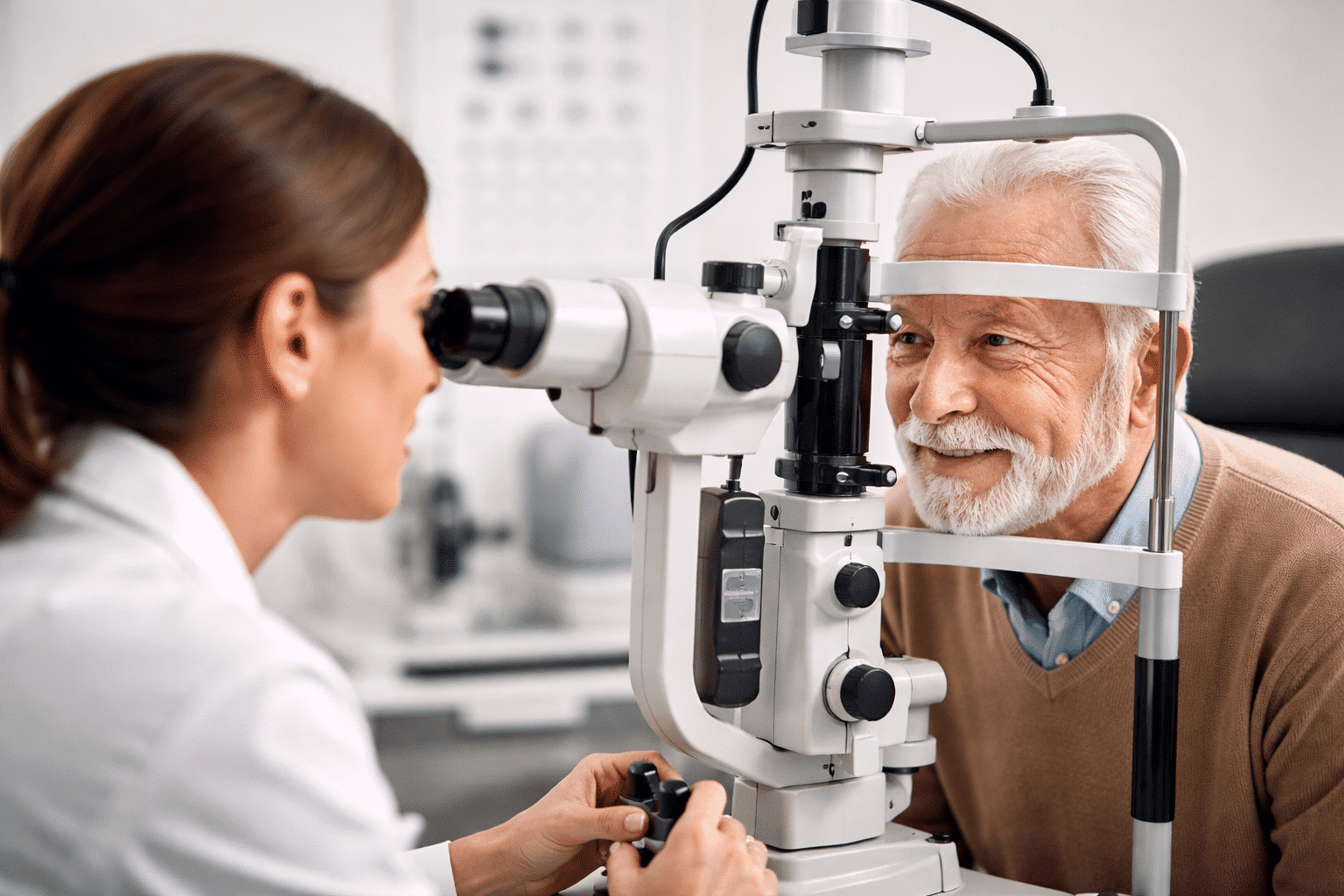
One of the pillars of eye care is regular ophthalmology appointments.
Even in the absence of visible symptoms, many eye diseases develop silently and are only diagnosed in advanced stages, when the damage to vision becomes irreversible.
Thus, regular visits to the ophthalmologist make it possible:
- Detect changes early, often before the elderly person notices any symptoms;
- Updating prescriptions for glasses or corrective lenses;
- Monitor intraocular changes related to diseases such as glaucoma;
- Identify signs of cataracts or macular degeneration in the early stages, when treatment options are most effective.
Experts recommend that people over 60 have their eyes checked at least once a year, or more often if there is a family history of eye diseases or associated health conditions.
Hands Care can support the elderly in this process, ensuring follow-up appointments with ophthalmologists and promoting continuity of care at home.
How to adapt your home for elderly people with reduced vision
When vision begins to deteriorate in old age, adapting the home environment can prevent falls and accidents and make it easier for older people to be independent.
Here are some practical suggestions:
- Adequate lighting: ensure bright, even light in all rooms, with special attention to corridors, the bathroom and the kitchen;
- Visual contrasts: use contrasting colors on stairs, doors and everyday objects to make it easier to identify surfaces and boundaries;
- Eliminate obstacles: loose carpets, cables on the floor or misplaced furniture can be dangerous for those with reduced vision, so it is imperative to keep the space clear;
- Large labels: identifying drawers and cupboards with enlarged text makes daily use easier;
- Non-slip surfaces: in the bathroom and kitchen, choose materials that reduce the risk of slipping.
These simple adjustments significantly improve an elderly person’s ability to navigate and feel safe at home.
Final considerations
Caring for eyesight in old age is caring for the freedom and dignity of those we love the most.
With proper attention to the signs, healthy habits, regular check-ups and an adapted environment, many challenges can be anticipated or even prevented.
In addition to specific eye care, Hands Care ‘s home care services guarantee not only practical day-to-day assistance, but also attentive care for all aspects of health and well-being in the home.
If you have any questions or would like to know how to guarantee more complete support, don’t hesitate to contact us. Our team is here to help, always with empathy and professionalism.