Why is mobility essential in old age?
Maintaining the ability to move freely goes far beyond the physical.
Mobility is closely linked to self-esteem, freedom and emotional balance, as it allows older people to continue to be present in their routines, maintain social relationships and make choices with more confidence.
When mobility is lost, a cycle of inactivity, isolation and dependence often sets in. That’s why, in our home care services, we pay special attention to regular physical stimulation, adapted to the reality of each person.
Common causes of loss of mobility in the elderly
Loss of mobility can have various origins. Some of the most common include:
- Loss of muscle mass (sarcopenia), which affects strength and endurance;
- Joint diseases, such as arthritis or osteoporosis, which limit movement and cause pain;
- Changes in balance and coordination, increasing the risk of falls;
- A sedentary lifestyle, which reduces functional capacity over time;
- An unsafe home environment, with obstacles that discourage movement;
- Vision or hearing problems or side effects of medication.
Knowing these causes allows for a more preventive and personalized approach, something that is always present in everything we do.
Simple exercises to do at home
Fortunately, you don’t need special equipment or a lot of space to start moving your body.
Below, we suggest some exercises for the elderly that can be done safely in the comfort of your own home:
- Getting up and sitting down: using a stable chair, try sitting down and getting up without supporting your hands. Repeat 8 to 10 times, depending on your ability;
- Walking in place: alternately raise your knees, as if you were walking still. One or two minutes is enough to activate the circulation;
- Gentle squats with support: with your hands on the back of the chair, bend your knees slightly, as if you were going to sit down, and return to the starting position;
- Heel raises : standing with your hands resting on a chair or wall, slowly rise up onto your tiptoes. Hold this position for a few seconds and lower yourself back down;
- Side steps: take small steps to one side and then the other, holding on if necessary.
These exercises should be done with suitable footwear, attention to posture and, if possible, with supervision.
At Hands Care, we include this type of practice in our home support programs, always adapted to the person’s condition and safety.
If you would like to know more about our services and how they work, take a look at our frequently asked questions.
Recommended stretches and daily routines
Stretching for the elderly is an effective way of maintaining flexibility and reducing stiffness, especially when you wake up or at the end of the day.
Here are some simple suggestions:
- Leg stretches: sitting on a chair, stretch out one leg and lean slightly forward. Hold this position for 20 seconds and then change legs;
- Hip rotation: sitting down, place your ankle on the opposite knee and lean your torso forward. This position helps to relieve tension in the hips;
- Shoulder and chest stretch: interlacing your hands behind your back, push your shoulders back slightly;
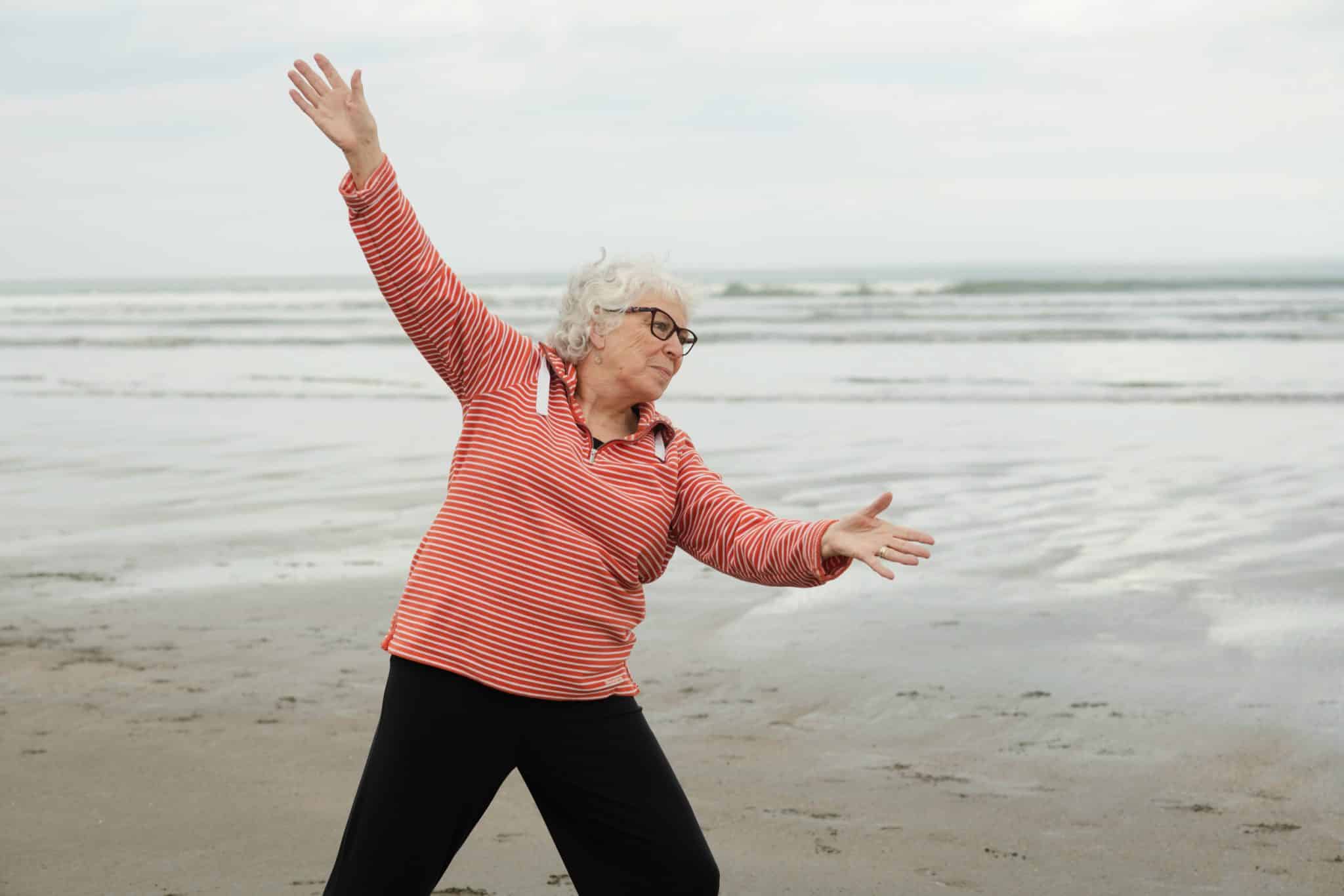
- Side tilt: standing or sitting, raise one arm and gently lean to the opposite side, holding the position for a few seconds.
It only takes 10 to 15 minutes a day to make a difference. What counts more than intensity is regularity.
When to seek professional help or physiotherapy
If you notice signs of a marked loss of mobility or increasing difficulty in performing basic tasks, it is best to seek specialist support.
Geriatric physiotherapy is indicated in situations such as:
- Frequent falls or constant fear of falling;
- Persistent joint or muscle pain;
- Inability to climb stairs or walk short distances;
- Needing support to stand up or get dressed.
At Hands Care, professional support is part of our commitment.
Whenever necessary, we coordinate our home support service with physiotherapists or other specialists, ensuring that each elderly person receives the right care at the right time.
Tips for staying motivated and safe
Motivation is just as important as movement. Here are some ideas to help keep you practicing regularly:
- Start slowly: set yourself simple goals, such as 10 minutes of exercise three times a week;
- Create a routine: try to practice at the same times. Repetition helps the body and mind adjust;
- Keep track of your progress: write down what you’ve done, the days you practiced and never forget to celebrate the small victories;
- Associate it with something pleasant: music, a conversation or even a moment with the caregiver can make everything lighter and more fun;
- Adapt the space: keep the environment safe and free of obstacles. Good support allows activities to be carried out more comfortably and safely.
At Hands Care, we encourage realistic and adjusted routines, with the support of caregivers who motivate, accompany and help make the day more active, always with affection and security.
If you’re looking for more practical and careful guidance, we recommend reading the article “7 tips for caring for the elderly“.
Final considerations
Improving mobility in the elderly is more than just helping someone to walk. It’s about giving them freedom, confidence and quality of life. Small gestures, when done regularly and with support, can have a huge impact.
If you feel that a family member needs more movement, more confidence or simply someone to encourage them, Hands Care is there for you.
To arrange a technical consultation or find out more about our services, simply fill in the contact form. We’re just a message away.